

Discover 7 ways to access affordable dental care for uninsured families, from community clinics to dental schools and assistance programs.
How to Find Dental Care for Uninsured Families
For dental care for uninsured families in Murray, Utah, start by checking whether your children qualify for Medicaid or CHIP dental benefits. Then call a community health center to ask about income-based eligibility. Dental and hygiene schools may offer accessible care, while 2-1-1 can help you find local programs and volunteer dental events. Call before you visit to confirm services, eligibility requirements, and whether the clinic is taking new patients.
Navigating coverage gaps should not mean waiting until someone has a toothache. The options below can help your family make a plan for checkups and get care when a problem comes up.
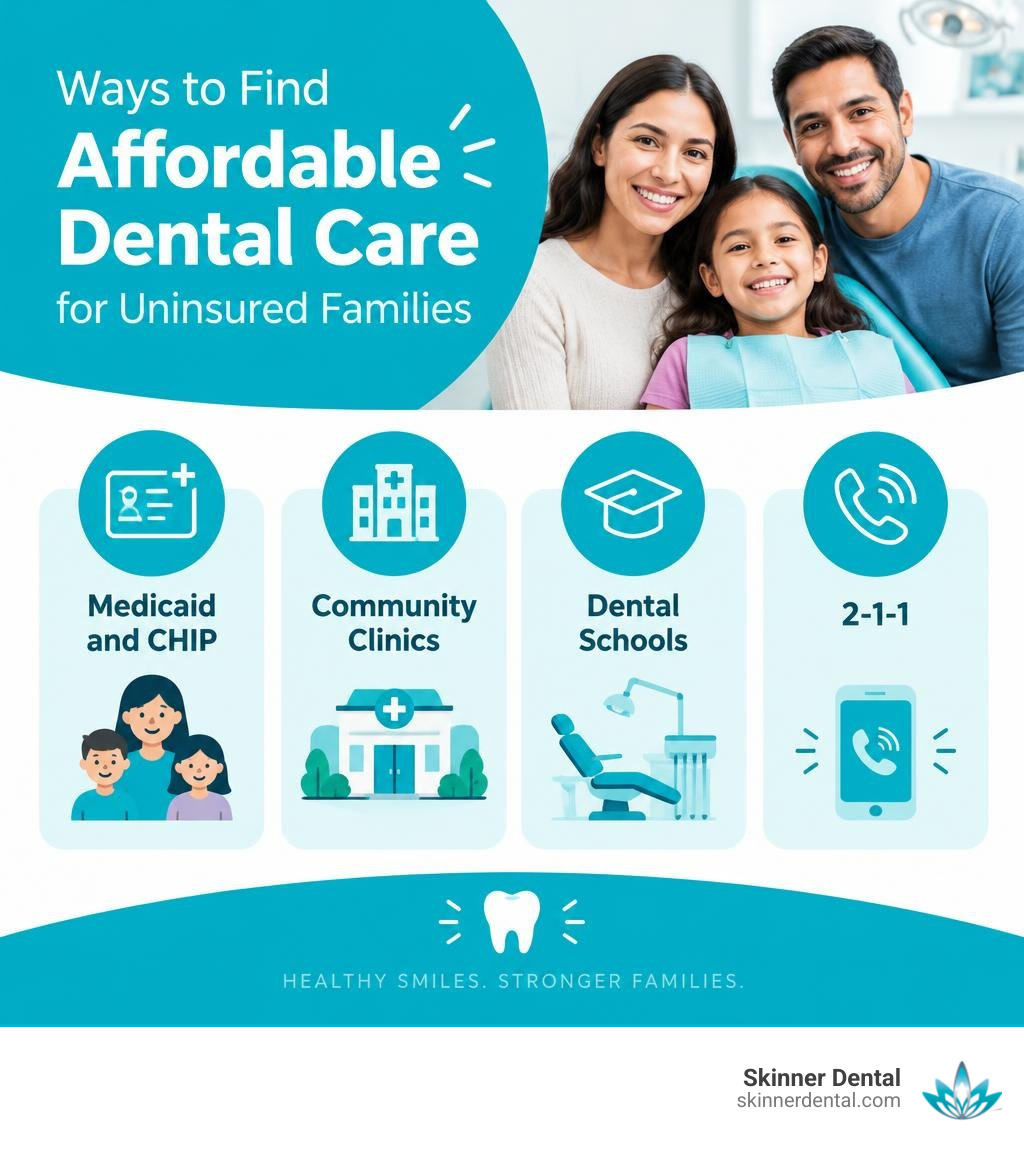
7 Ways to Access Dental Care for Uninsured Families
Finding quality dental assistance when you do not have employer-sponsored coverage requires knowing where to look. Many public safety net programs, non-profit institutions, and private practices offer structured pathways to help families stay on top of their routine preventive care and address unexpected dental emergencies.
| Option Type | Primary Advantage | Typical Focus Area | Best For |
|---|---|---|---|
| Community Health Centers (FQHCs) | Income-adjusted eligibility | Preventive cleanings, exams, basic fillings, emergency visits | Families needing ongoing, regular dental homes |
| Dental & Hygiene Schools | Highly thorough treatments overseen by faculty | Exams, cleanings, fluoride, basic restorative work | Individuals with flexible schedules seeking detailed checkups |
| Medicaid & CHIP | Comprehensive state-supported coverage | Full pediatric oral wellness, select adult care | Qualifying children, teens, and eligible adults |
| Charitable Care Events | Community volunteer services | Cleanings, extractions, urgent pain relief | Addressing immediate acute pain or delayed maintenance |
| In-Office Membership Plans | Direct care agreements with private practices | Preventive packages and restorative care options | Families wanting consistent care in a private office setting |
To explore broader national guidelines on community care, consult resources like the American Dental Association’s guide on places to look for affordable dental care.
1. Community Health Centers and Sliding-Scale Facilities
Community Health Centers, including Federally Qualified Health Centers (FQHCs), play a central role in delivering primary oral health services to underserved populations. These centers receive federal support to deliver comprehensive care to everyone in the community, regardless of individual health insurance status.
At an FQHC, services are structured around income-based eligibility. This means the clinic adjusts its service tiers based on verified household income and family size. For uninsured families, these facilities provide essential checkups, digital radiographs, routine cleanings, pediatric sealants, and restorative treatments. Finding a nearby facility creates an ongoing dental home where your family can receive continuous wellness care rather than sporadic emergency visits.
2. Dental Schools and Hygiene Training Clinics
University dental schools and accredited dental hygiene training programs offer exceptional clinical care to the public. In these educational environments, dental students and hygiene candidates provide care under the direct, close supervision of licensed dentists and clinical faculty members.
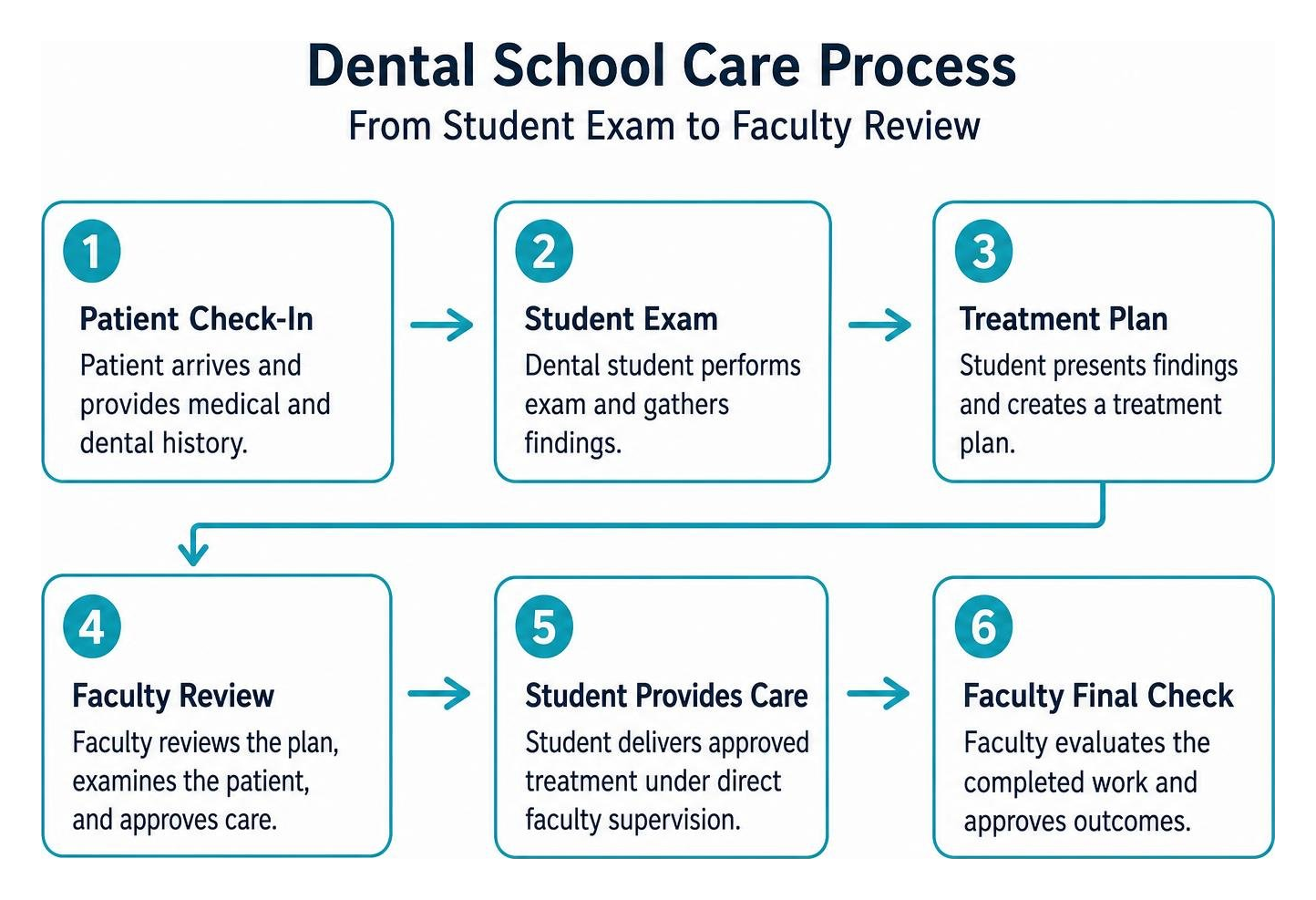
Because treatment sessions involve thorough evaluations and step-by-step faculty reviews, appointments generally take longer than visits in standard clinical settings. However, the level of precision is exceptionally high. Hygiene schools are particularly valuable for preventive services, such as routine cleanings, deep periodontal scalings, diagnostic assessments, and fluoride applications, while full dental schools provide comprehensive restorative, endodontic, and oral surgery procedures.
3. Government Programs and Public Assistance (Medicaid & CHIP)
Public insurance programs represent one of the most effective safety nets for children and eligible adults. The Children’s Health Insurance Program (CHIP) and Medicaid provide comprehensive dental coverage for millions of children nationwide. In many areas, children in a family of four earning moderate household incomes can qualify for these benefits.
Under federal guidelines, Medicaid and CHIP cover essential pediatric services, including:
- Routine bi-annual oral examinations and cleanings
- Diagnostic digital X-rays
- Preventive sealants and fluoride varnishes
- Dental fillings, crowns, and space maintainers
- Medically necessary extractions and emergency dental care
For adults, dental coverage under Medicaid varies based on specific state eligibility criteria, with expanded coverage frequently available for pregnant women to protect maternal and fetal wellness.
4. Charitable Organizations and Volunteer Care Events
Non-profit organizations and volunteer healthcare networks frequently host large-scale community outreach events. Programs such as Give Kids A Smile® and Mission of Mercy mobile clinics mobilize volunteer dentists, hygienists, and support staff to provide free dental services to families in need.
These pop-up clinics typically operate on a first-come, first-served basis over single-day or weekend sessions. They deliver vital immediate interventions, including urgent tooth extractions, professional cleanings, composite fillings, and temporary repairs. While volunteer events are not a substitute for an established dental home, they provide critical relief for individuals experiencing acute dental pain or prolonged gaps in preventive care.
5. In-Office Dental Membership and Savings Plans
Many modern private dental practices recognize the challenges faced by families without traditional dental insurance. To make routine care accessible and transparent, these offices provide in-house dental membership and savings plans.
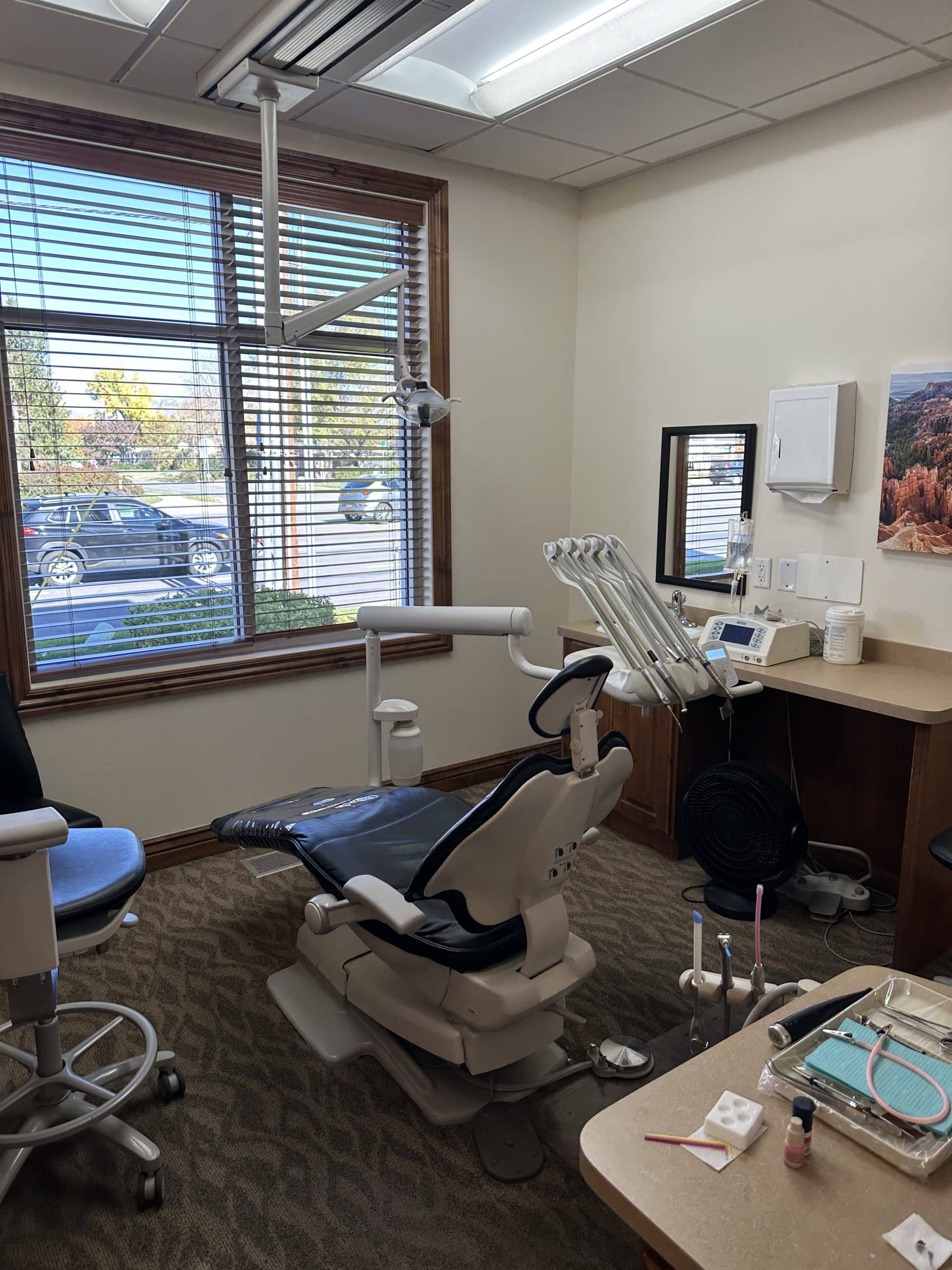
Under an in-office plan, a family enrolls directly with the practice. In exchange, the plan covers standard preventive maintenance—such as bi-annual cleanings, complete diagnostic examinations, and routine X-rays—while providing clear savings on restorative and cosmetic procedures like fillings, crowns, and emergency visits. This direct-care model eliminates third-party insurance claim forms, waiting periods, pre-authorizations, and annual maximums.
6. Targeted Programs for Children, Seniors, and High-Need Groups
Specialized non-profit and public programs target demographic groups that face unique oral health risks:
- School-Based Initiatives: Programs like classroom sealant clinics partner with public schools to apply protective molar sealants and fluoride directly to children during the school day.
- Maternal Oral Health Programs: Specific public health initiatives provide focused dental care for expectant mothers, recognizing that treating gum inflammation and tooth decay during pregnancy supports overall infant wellness.
- Senior and Disability Assistance: Organizations like the Dental Lifeline Network coordinate volunteer dentists who provide comprehensive care to seniors and individuals with permanent physical disabilities or chronic medical conditions.
7. Local Health Departments and 2-1-1 Helplines
If you are unsure where to begin your search, local public health departments and community health navigators serve as central information hubs. Dialing 2-1-1 connects you with a local specialist who can provide directory listings of public health dental clinics, sliding-scale providers, and upcoming charity dental days in your immediate area.
These community referral networks also offer multilingual support to help families navigate program eligibility, application deadlines, and transportation resources.
Essential Documentation Needed for Community Dental Programs
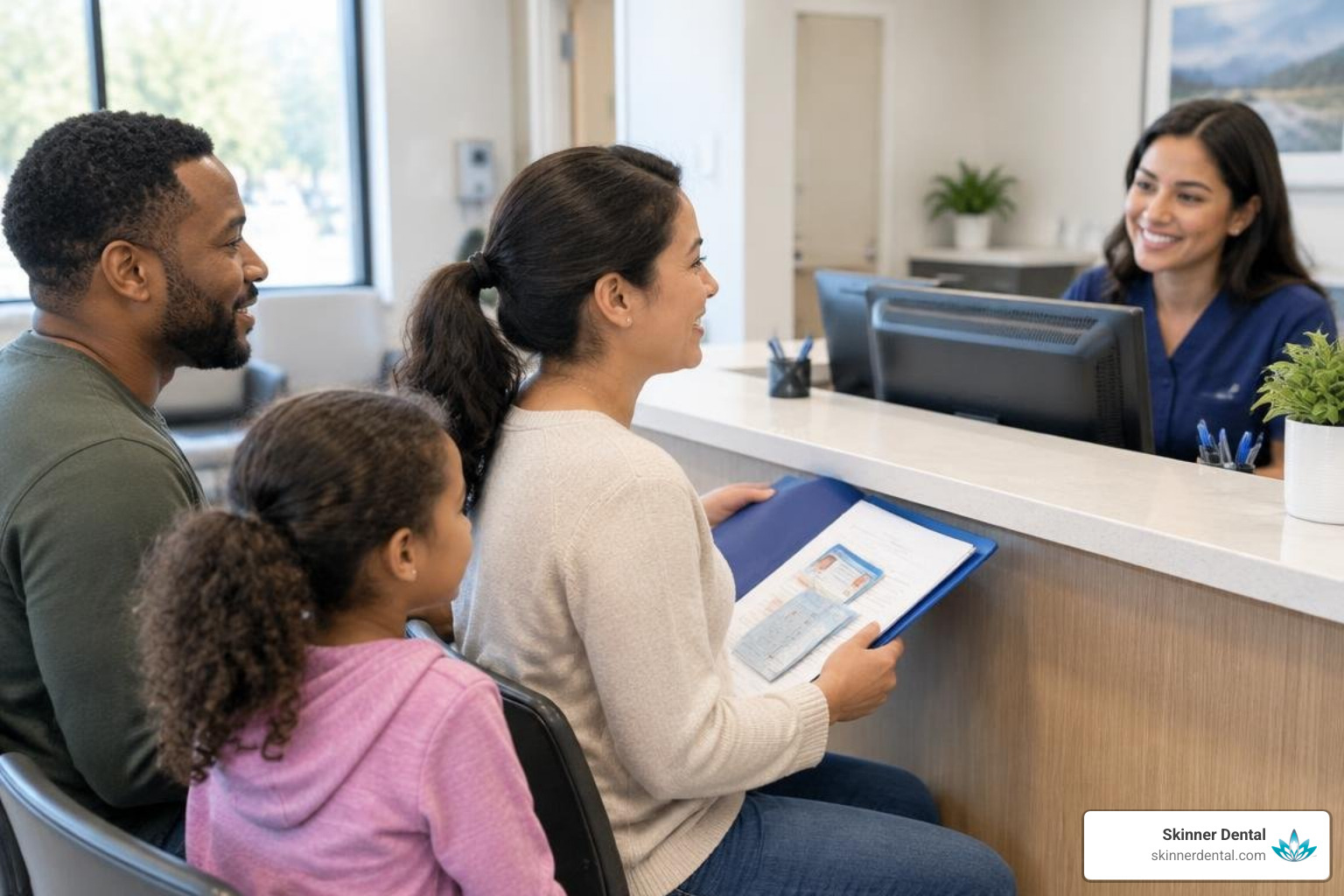
When visiting a community clinic or enrolling in a public dental program, arriving with thorough documentation ensures a smooth intake process and accurate eligibility determination.
Qualifying for Dental Care for Uninsured Families
To establish eligibility, safety net clinics require documentation that verifies patient identity and local community residency. Make sure to gather:
- Valid government-issued photo identification (driver’s license, state ID card, or passport)
- Identification for dependent children (birth certificates, school records, or medical cards)
- Proof of local residential address (current utility bill, residential lease agreement, or mortgage statement)
Income and Household Verification Guidelines
Because eligibility depends on your household’s position relative to federal poverty guidelines, facilities require transparent verification of all income streams. Prepare to present:
- Recent pay stubs spanning the last four consecutive weeks
- Most recent federal tax return or W-2 statements
- Documentation of state assistance, unemployment compensation, or child support
- Employer verification letters if pay stubs are unavailable
What Services Are Typically Covered by Community Clinics?
Community clinics prioritize treatments that eliminate infection, prevent disease progression, and maintain functional oral health.
Preventive and Diagnostic Treatments
Preventive care serves as the foundation of public health dentistry. Clinics focus heavily on:
- Comprehensive oral examinations and oral cancer screenings
- Low-radiation digital radiographs to identify hidden decay
- Professional cleanings (prophylaxis) to eliminate plaque and tartar
- Protective dental sealants on permanent molars for children
- Therapeutic topical fluoride applications to strengthen enamel
Restorative and Emergency Interventions
When oral health issues arise, safety net clinics provide essential basic restorative treatments:
- Composite (tooth-colored) and amalgam fillings
- Simple and surgical tooth extractions for non-restorable teeth
- Emergency evaluations and palliative care for acute dental abscesses
- Basic root canal therapy and limited crown or denture services (depending on clinic resources)
Navigating Roadblocks in Securing Dental Care for Uninsured Families
Securing community dental appointments can sometimes involve obstacles, such as extended clinic waitlists or limited new patient availability. To overcome these hurdles:
- Call Early in the Day: Many community facilities release same-day emergency slots or cancellation openings first thing in the morning.
- Inquire About Standby Lists: Ask clinic intake coordinators if they maintain a short-notice standby list for cancellations.
- Expand Your Radius: Look into training schools and health centers in neighboring nearby communities.
- Maintain Clear Communication: Keep your contact details updated with clinic administrators and confirm scheduled appointments well in advance to retain your placement.
Frequently Asked Questions About Affordable Family Dentistry
What should families do if local community clinics have long waitlists?
If your primary local clinic has an extended waitlist, contact your regional 2-1-1 service to identify other nearby community centers, dental hygiene colleges, or mobile charity events. For urgent dental pain or infection, seek clinics that offer dedicated walk-in emergency intake hours.
Can pregnant women receive dental care without insurance?
Yes. Expectant mothers should never postpone necessary dental visits. Routine cleanings, diagnostic X-rays with proper shielding, local anesthetics, and cavity restorations are safe during pregnancy. Many states offer expanded Medicaid programs specifically for pregnant women that extend coverage through the postpartum period.
What is the difference between an FQHC and a free volunteer clinic?
A Federally Qualified Health Center (FQHC) is a permanent, year-round medical and dental facility that provides care based on income-based eligibility. A free volunteer clinic typically operates on specific dates or limited schedules, providing community-supported emergency and basic care through volunteer dental professionals.
Conclusion
Lacking dental insurance should never prevent your family from receiving routine, high-quality oral healthcare. By taking advantage of sliding-scale community health centers, educational dental clinics, public benefit programs, and private in-house membership options, you can protect your family’s smiles and prevent minor dental issues from turning into complex emergencies.
At Skinner Dental, we believe every patient deserves compassionate, gentle care in a comfortable, family-friendly environment. We provide comprehensive family and emergency dentistry in Murray, Utah, offering advanced same-day treatments—including single-visit CEREC crowns and prompt emergency care—along with bilingual Spanish-speaking services to ensure your entire family feels right at home.